
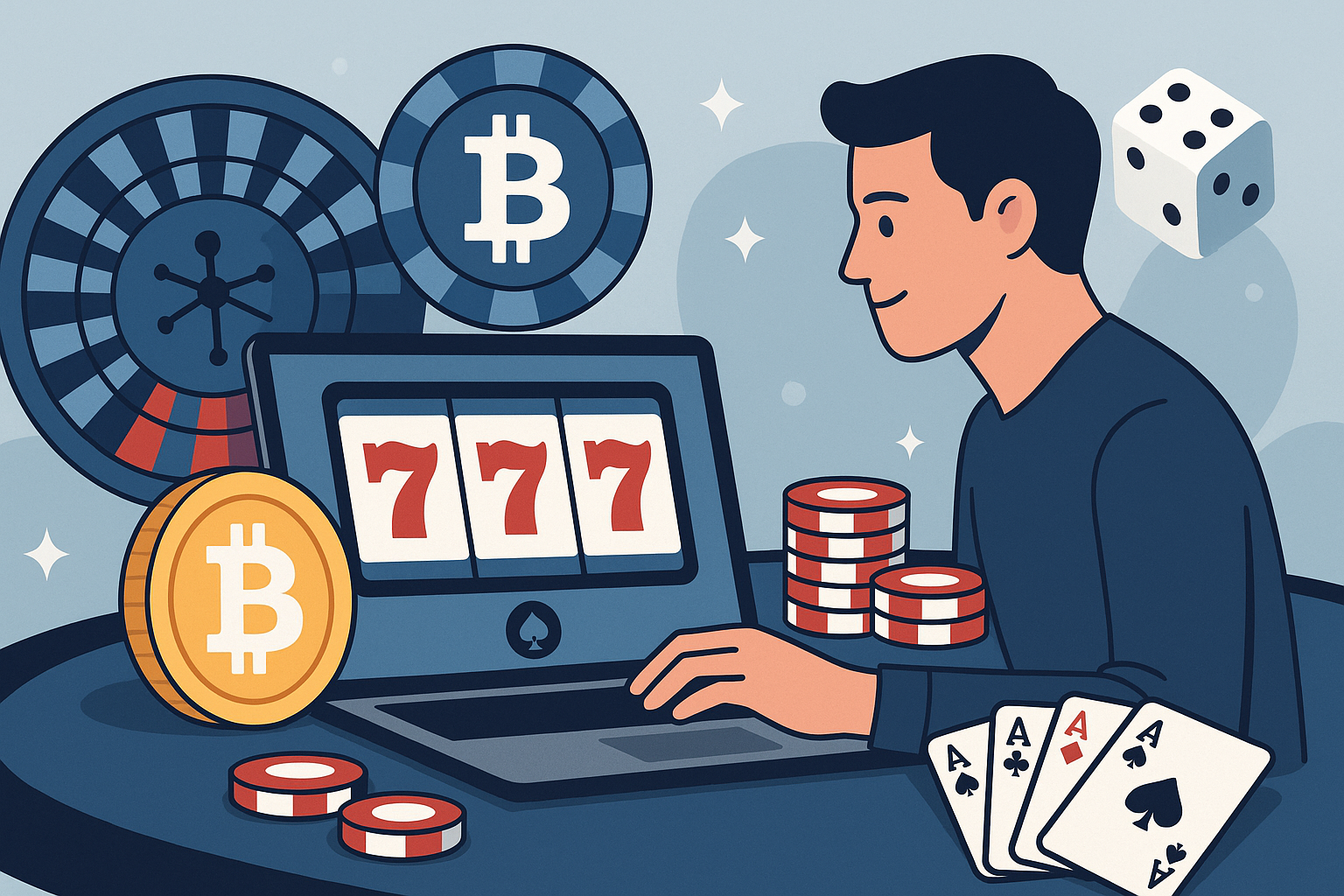
Understanding Cryptocurrency Casinos
Cryptocurrency casinos are online gambling platforms that accept digital currencies like Bitcoin, Ethereum, and other altcoins for deposits and withdrawals. These platforms operate similarly to traditional online casinos but use blockchain technology to process financial transactions. Players can wager using crypto instead of conventional currencies like dollars or euros.
The integration of cryptocurrency into online gambling emerged in the early 2010s, gaining momentum as digital currencies became more mainstream. Today, numerous platforms either exclusively accept crypto or offer it alongside traditional payment methods.
How Cryptocurrency Payments Work in Online Casinos
When using crypto at an online casino, the payment process differs from traditional banking methods. Players maintain a digital wallet—either hosted by the casino or a third-party provider—where they store their cryptocurrency. To fund a casino account, users transfer crypto from their personal wallet to the casino's designated wallet address.
The transaction is recorded on the blockchain, a distributed ledger that verifies and confirms the transfer. This process typically takes anywhere from a few minutes to an hour, depending on the specific cryptocurrency and network congestion. Once confirmed, the funds appear in the player's casino account.
Withdrawals follow a similar process in reverse. Players request a withdrawal to their personal wallet address, and the casino processes the transaction through the blockchain network.
Common Cryptocurrencies Accepted
While Bitcoin remains the most widely accepted cryptocurrency at online casinos, many platforms now support multiple digital currencies:
- Bitcoin (BTC): The original cryptocurrency, accepted at virtually all crypto casinos
- Ethereum (ETH): Known for faster transaction times than Bitcoin
- Litecoin (LTC): Often chosen for lower transaction fees
- Bitcoin Cash (BCH): A Bitcoin variant designed for quicker processing
- Tether (USDT): A stablecoin pegged to the US dollar, reducing volatility concerns
- Dogecoin (DOGE): Popular for small transactions due to minimal fees
Some casinos also develop their own proprietary tokens or accept newer cryptocurrencies as the market evolves.
Advantages of Using Cryptocurrency
Transaction Speed
Cryptocurrency transactions typically process faster than traditional banking methods. While bank transfers may take several business days, crypto deposits often appear within minutes to hours. Withdrawals also tend to be processed more quickly than conventional payment methods.
Reduced Fees
Many cryptocurrency transactions involve lower fees compared to credit cards or bank transfers. This can be particularly beneficial for frequent players or those making larger transactions. However, fees can fluctuate based on network conditions.
Privacy Considerations
Cryptocurrency transactions offer a different privacy profile than traditional payments. Blockchain transactions are pseudonymous—they don't directly contain personal information like names or addresses, though the transaction itself is publicly recorded on the blockchain. Some players appreciate this aspect, though it's important to note that complete anonymity is not guaranteed.
Accessibility
Players in regions with limited banking options or strict gambling regulations may find cryptocurrency provides easier access to online casinos. Digital currencies operate independently of traditional banking systems.
Potential Drawbacks and Considerations
Price Volatility
Cryptocurrencies can experience significant price fluctuations within short periods. A deposit made when Bitcoin is valued at one price may be worth considerably more or less by the time a player withdraws. Some users mitigate this by using stablecoins pegged to traditional currencies.
Learning Curve
For those unfamiliar with cryptocurrency, there's a learning process involved in setting up wallets, understanding blockchain confirmations, and managing digital assets securely. This can be intimidating for newcomers.
Irreversible Transactions
Unlike credit card payments that can be disputed or reversed, cryptocurrency transactions are generally final once confirmed on the blockchain. This means sending funds to an incorrect address or falling victim to fraud offers limited recourse.
Regulatory Uncertainty
The legal status of cryptocurrency gambling varies significantly by jurisdiction. Some countries have clear regulations, while others remain in gray areas. This regulatory landscape continues to evolve.
Steps to Use Cryptocurrency at an Online Casino
Setting Up a Crypto Wallet
Before using cryptocurrency at a casino, you'll need a digital wallet. Options include software wallets (mobile or desktop applications), hardware wallets (physical devices), or exchange-hosted wallets. Research security features and choose a reputable provider.
Acquiring Cryptocurrency
Purchase cryptocurrency through an exchange platform, peer-to-peer marketplace, or Bitcoin ATM. This typically requires identity verification and linking a bank account or payment method.
Making a Deposit
Log into the casino, navigate to the cashier or deposit section, and select cryptocurrency as your payment method. The casino will provide a wallet address or QR code. Copy this address carefully—mistakes cannot be undone. Send the desired amount from your personal wallet to the casino's address.
Monitoring Confirmation
Wait for the blockchain network to confirm the transaction. The casino will typically display pending deposits and update your balance once sufficient confirmations occur.
Security and Responsible Gambling
When using cryptocurrency for online gambling, security should be a priority. Only use reputable casinos with established track records. Enable two-factor authentication on both casino accounts and crypto wallets. Never share private keys or seed phrases with anyone.
Regarding responsible gambling, cryptocurrency's ease of use shouldn't encourage excessive wagering. Set personal limits, understand that all forms of gambling carry risk, and never wager more than you can afford to lose. Many jurisdictions offer resources for problem gambling support.
Always verify that online gambling is legal in your jurisdiction before participating. Regulations vary widely by country and region. Players are responsible for ensuring their activities comply with local laws.
Future Developments
The intersection of cryptocurrency and online casinos continues to evolve. Emerging technologies like smart contracts may enable provably fair gaming mechanisms, while layer-2 solutions aim to reduce transaction fees and increase speed. However, the regulatory landscape remains a significant factor that will shape how these platforms develop.
As with any financial decision, thorough research and understanding of both cryptocurrency mechanics and gambling risks are essential before participating.